Pages

Saturday, October 7, 2017

Excerpted from OSLO, Norway (AP) —

The International Campaign to Abolish Nuclear Weapons won the Nobel Peace Prize on Friday, a forceful show of support for a grassroots effort that seeks to pressure the world’s nuclear powers to give up the weapons that could destroy the planet.

The choice of the little-known coalition of disarmament activists put the Nobel committee again at the forefront of geopolitics at a time when fears are rising over North Korea’s nuclear and missile program and the invective it has drawn from U.S. President Donald Trump.

The committee cited the tiny, Geneva-based ICAN for its work that led to the Treaty on the Prohibition of Nuclear Weapons that was reached in July at the United Nations.

The group “has been a driving force in prevailing upon the world’s nations to pledge to cooperate ... in efforts to stigmatize, prohibit and eliminate nuclear weapons,” Norwegian Nobel Committee chairwoman Berit Reiss-Andersen said in the announcement.

More than 120 countries approved the treaty over opposition from nuclear-armed countries and their allies. In a statement issued after the Nobel was announced, the U.S. reiterated its position that the treaty “will not result in the elimination of a single nuclear weapon.”


The network coordinator for the International Campaign to Abolish Nuclear Weapons said the Nobel Peace Prize awarded to the organization “shines a needed light” on the pathway towards a world free of nuclear weapons. (Oct. 6).

The treaty requires all ratifying countries “never under any circumstances to develop, test, produce, manufacture, otherwise acquire, possess or stockpile nuclear weapons or other nuclear explosive devices.” It also bans any transfer or use of nuclear weapons or nuclear explosive devices — and the threat to use such weapons.

The nuclear powers oppose the treaty, which goes well beyond existing nonproliferation agreements, arguing that they alone should have the weapons in order to support stability in the world.

The U.S., Britain and France said the prohibition wouldn’t work and would end up disarming their nations while emboldening what U.S. Ambassador Nikki Haley called “bad actors.” They instead suggest strengthening the nonproliferation treaty, which they say has made a significant dent in atomic arsenals.

ICAN, a coalition of 468 nongovernmental groups from over 100 countries, says that argument is outdated.

“This prize is really a tribute to the tireless efforts of many millions of campaigners and concerned citizens worldwide who have, ever since the dawn of the Atomic Age, loudly protested nuclear weapons, insisting that they can serve no legitimate purpose and must be forever banished from the face of our Earth,” said ICAN executive director Beatrice Fihn.
Beatrice Finn

The prize is likely to give new momentum to ICAN and its allies in the coming months as the group tries to achieve ratification of the treaty by 50 nations. That would allow the ban to become binding under international law for those countries and put nuclear-armed states in the uncomfortable position of being outliers.

...
The five original nuclear powers — the U.S., Russia, China, Britain and France, which also are permanent members of the U.N. Security Council — support nuclear nonproliferation but boycotted the treaty negotiations. Nuclear-armed India, Pakistan and North Korea didn’t vote.

“If you want to make sure that no new states get nuclear weapons, you need to be ready to reject nuclear weapons themselves,” Fihn said. “This treaty really demands that they walk the walk.”
...

The committee, citing nearly 15,000 nuclear weapons in the world, said “the risk of nuclear weapons being used is greater than it has been for a long time.”

...

The Nobel committee wanted “to send a signal to North Korea and the U.S. that they need to go into negotiations,” said Oeivind Stenersen, a historian of the peace prize.

“The prize is also coded support to the Iran nuclear deal” he said, alluding to dialogue that won curbs on Tehran’s nuclear program.

ICAN’s Fihn said many were worried about Trump.

“I think that the election of President Donald Trump has made a lot of people feel very uncomfortable with the fact that he alone can authorize the use of nuclear weapons and there’s nothing people can do to stop him,” she told a news conference at the World Council of Churches building that hosts ICAN’s office in Geneva.

“There is no one who we can trust with the ability to destroy the entire world,” she said.
The Indira Gandhi Memorial Tulip garden  
..

U.N. Secretary-General Antonio Guterres tweeted: “Now more than ever we need a world without nuclear weapons.”

And India sent the group tulips, said ICAN network coordinator Daniel Hogsta.

“It was nice to send flowers, but we want them to sign the treaty,” he said.


Wednesday, October 4, 2017

President of CSAHC seeking to expand its serviice to Canada

Last week President of Caribbean South American Council visited Canada. He held discussions with many interested persons from the regional community on ways to extend the services of CSAHC to Canadians willing to invest in the Caribbean and South America.
Sergio Bhairo is the President of the Bay Point Chamber of Commerce.


Sergio said his first big push would be to lobby Prime Minister Trudeau and the Liberal Government to update the outdated CARIBCAN program and modernize it.

" It is vital, Sergio Bhairo declared that Canada steps up to the plate and assists the region especially after the recent devastation by hurricanes #Irma and #Maria".

Sergio Bhairo has spent decades lobbying societal leaders to make the best use of The Caribbean Basin Initiative In the eighties when he lived in Barbados he urged the late Prime Minister Errol Barrow to get other regional leaders onboard so that the region's business profile was more diversified.
First Secretary of CSAHC- the Late Mervyn Dymally.


Through the CSAHC he has worked with the late Mervyn Dymally to raise awareness of the need to boost new creative business ideas and links to North America.
The Indian government has pledged to broaden the roll-out of solar and battery storage to households without power in rural and remote towns and villages, as a part of a newly launched $2.5 billion project to electrify all of the country’s households by the end of 2018.

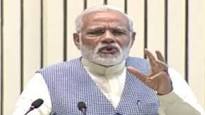
At the launch of the project on Monday, Indian PM Narendra Modi said around one-quarter of all homes in the country were yet to be electrified, meaning about 300 million of India’s 1.3 billion people are still not hooked up to the grid.
Prime Minister of India- Narendra Modi

As part of the program, the government will identify households eligible for free electricity connections, with no fee charged for the connection of “poor citizens,” the PM said.

But the majority of the program’s budget – more than 80 per cent – would go towards rural households, where solar power packs of 200-300W will be added with battery banks to un-electrified homes, along with LED lights, a DC fan and a DC power plug, and repair and maintenance for five years.

As PV-Tech reports, Modi’s latest announcement appears to be a major extension of the plan announced last December by former energy minister Piyush Goyal, that more than 16,000 Indian households across 800 remote villages would be given a solar panel, with an eight-hour battery storage backup.

When the government first started rolling out its rural electrification program, known as DDUGJY, there were more than 18,000 villages identified as un-electrified.

The scale of the new plan, and its focus on solar and battery storage, also undermines one of the federal government’s key arguments in favour of digging up and exporting more Australia coal: that it is a vital source of “cheap electricity” for India’s poor.

“India has a massive program of expanding electrification across the country and Australian coal has a very big role to play in that,” Prime Minister Malcolm Turnbull said in April when he visited the sub-continent and met with Indian coal billionaire Gautam Adani, whose company is, still, deliberating its final investment decision on the $21-billion Carmichael coal mine in Queensland’s Galilee basin – Australia’s largest, if built.

But that’s not the view of many reports and energy industry analysts. In February, for instance, a report from The Energy and Resources Institute (Teri) in New Delhi, suggested that renewables and batteries could undercut coal in India in less than a decade, as long as costs of the technologies continued on their current trajectory.

And if that happens, the report adds, it will reduce the country’s carbon dioxide emissions by about 600m tonnes, or 10 per cent, after 2030.

One of the key goals of India’s solar and battery storage roll-out, which will be coordinated by the state-run Rural Electrification Corporation, is to cut use of kerosene in rural and remote areas, which is both a fire risk and a heavy pollutant.

The states are expected to complete the electrification by December 2018. 
NEW YORK (AP) — The holiday of Diwali is starting to light up mainstream America.

Diwali, a festival of lights celebrated by Hindus, Sikhs, Jains and others in India and other countries, has long been observed in immigrant communities around the U.S.

But now public celebrations of the holiday are starting to pop up in places ranging from Disneyland and Times Square to parks and museums.

The Times Square event is the brainchild of Neeta Bhasin, who says that while many Indian immigrants have found great success in the U.S., “still people don’t know much about India. I felt it’s about time that we should take India to mainstream America and showcase India’s rich culture, heritage, arts and diversity to the world. And I couldn’t find a better place than the center of the universe: Times Square.”


Bhasin, who came to the United States from India 40 years ago, is president of ASB Communications, the marketing firm behind Diwali at Times Square. The event, now in its fourth year, has drawn tens of thousands of people in the past. It’s scheduled for Oct. 7, from 2 p.m. to 9 p.m., with dance performances, Bollywood singers, a bazaar of food, saris and other goods, and a lighting ceremony, http://diwalitimessquare.com/.

While Diwali celebrations are held throughout the fall, the holiday’s actual date is Oct. 19. Also called Deepavali, it’s an autumn harvest festival held just before the Hindu new year. Celebrations include lighting oil lamps or candles called diyas to symbolize “a victory of knowledge over ignorance, light over darkness, good over evil,” said Bhasin.

The Diwali celebration at Disney California Adventure Park in Anaheim, California, includes performances of traditional Indian dances and a Bollywood dance party for guests. It’s part of a festival of holidays at the theme park reflecting cultural traditions from around the world. The Disney festival begins Nov. 10 and runs through Jan. 7,
http://www.facebook.com/caribsouth

San Antonio, Texas, has one of the nation’s largest city-sponsored celebrations of Diwali, drawing more than 15,000 people each year. The 2017 event, scheduled for Nov. 4 at La Villita, a historic arts village, will be its ninth annual Diwali celebration with Indian dance, entertainment, food, crafts, fireworks and the release of lighted candles into the San Antonio River along the city’s River Walk.


New York City’s Rubin Museum will mark Diwali with an overnight Ragas Live Festival featuring more than 50 Indian classical musicians performing amid the museum’s collection of sacred Himalayan art. The event begins Oct. 21 at 10 a.m. and continues all day and night through Oct. 22 at 10 a.m.

Chai and mango lassis will be served, visitors will have access to all the galleries and pop-up events like meditation and sunrise prayer will be offered. Special tickets will be sold for the opportunity to sleep beneath the artwork.

Other places hosting Diwali celebrations include Cary, North Carolina, in Regency Park, Oct. 14. 

 Flushing Town Hall, Queens, New York, Oct. 29,

 The Seattle Center, Oct. 21,


The Dulles Expo center in Chantilly, Virginia, Oct. 7-8,

and Memorial Park in Cupertino, California, Sept. 30,

In Columbus, Ohio, the Ohio History Center is hosting a photo exhibit about the city’s fast-growing population of immigrants from Nepal, Bhutan and India, with a Diwali event Oct. 8.

Bhasin said Diwali’s message is particularly timely now. “It is extremely important to be together and showcase to the world, not only Indians, but the entire immigrant community, to be together with Americans and to show the world we are one, we are all the same human beings,” she said.

Friday, September 29, 2017

New Directions for the Caribbean

Many Caribbean nations have been devastated by monster hurricanes #Irma, #Jose#Maria within the short space of three weeks this month.

The Caribbean South American Hispanic Council [CSAHC] which has quietly sought to influence major regional decision makers to shift to a new paradigm of thinking  for societal development has decided to take a more decisive and direct role.

The Council 's President Sergio Singh -Bhairo who has been fortunate to a confidante of several leading regional societal decision makers has begun a series of initiatives to reach those who are willing to create business initiatives to help their countries.
Sergio Singh-Bhairo- president of Bay Point Chamber of Commerce

Currently, on a two-day visit to meet with CSAHC secretary Milton Drepaul in Canada, he is focused on finding simple, easy to implement solutions for the many businesses and entrepreneurs who will be rebuilding or rethinking ways of going forward.

Sergio has many non conventional views on what can be accomplished. His major view is that businesses should be grounded on the idea of service to the country and people in which it is based.

From that base it can reach out first through Diaspora and later friendship connections to serve all of humanity.

Behind the obvious practical material success goals CSACH aims to inspire entrepreneurs to see ultimate life and world goals.

Though some may think that worldly success and spiritual goals are not linked they can see that one of the most successful companies in the world was shaped by a leader Steve Jobs who was a quiet devotee of Parmahansa Yogananda. At his funeral he instructed that everyone who attended should receive a personal copy of Yogananda 's famaous Autobiograpgy of a Yogi.

The Beatles and their company were inspired by the teaching of Maharishi Mahesh Yogi.

David Lynch, the successful screenwriter and producer created the David Lynch Foundation to get young people who might drop out of school to meditate and reclaim their inner wisdom and creativity. George Harrison donated one of creations 'My Sweet Lord' to Self Realisation Fellowship (SRF).

Not only business persons but successful politicians have behind the scenes spiritual experiences. Narendra Modi the current leader of India spent years in the Himalayas with several gurus before attaining business and political success. A strong influence on his life was one of the leaders of India's independence movement Bhagat Singh. Sergio Bhairo is also a strong believer in Bhagat's  ideas and is planning a school based on his thoughts.

Both Milton Drepaul (who spent a decade of his life in Jamaica) and Sergio have been influenced by Bob Marley's music and ideas. Sergio got the UNC and Its leader Basdeo Panday to embrace Bob's Positive Vibrations as the theme for the UNC's successful 1995 election victory.

miltondrepaul.com

 Sergio has been fortunate to have also a friend and close associate  of Satguru Sivaya Subramuniyaswami (Gurudeva) and traveled with him to several countries before he settled his movement in Hawaii.


Wednesday, September 27, 2017

Tribute to Bhagat Singh by Sergio Bhairo

Today on the anniversary of his birth I pause to reflect on the ideas and life contribution of someone who died eighty-six years ago. Bhagat Singh was a mere 24 years old when he died. He however, left a lasting impression on millions of people In India.

Seldom in a country's history has someone so young had a profound influence on a country's history. He was a revolutionary martyr who propelled India's fight for Independence from its colonial master Britain by giving his life.

Born in an area of colonial India that is now in the state of Pakistan Bhagat Singh decided at the early age of 13 to leave the colonial school system and go directly into a life of active fighting for India's independence. It is amazing to think how mature and proactive he was even before he fully became what we would call a teenager.

Much of his life history has been distorted and exaggerated by the British colonial historians. They portrayed him as a violent, criminal thug. What he did was to get involved in demonstrations against the ruling masters. He felt that active rebellion in the context of his times was appropriate action. The authorities quickly saw that his vibrational energy and activism was a serious threat to their ruling system. He was arrested on several occasions.

Eventually, after a show trial, Singh was found guilty of killing a British officer. He was convicted and hanged on March 23 ,1931. This 24-year-old never lived to see the Independence of the country for whom he gave his life.

Bhagat was born into a revolutionary Sikh family in Punjab. His family were dedicated nationalists. When he was born his father was in jail for political activities against the Colonial master state.

At the early age of 13 Bhagat was well aware of his family's revolutionary views and actions. His father supported Mahatma Gandhi. Following Gandhi's call to boycott British aided institutions he left school and became a student of the Lahore National College. He plunged into studying European Revolutionary movements.

As a result, he became disenchanted with Gandhi's nonviolent approach to confronting the British. He was convinced that armed conflict was the best way to drive the British out and claim India's nationhood.


When he was just 19 Bhagat Singh created his own organization for revolutionary action. He also joined the Hindustan Republican Association where he mixed with many prominent revolutionaries. When he learned of plans to get him married he left this school.

By then,the British police had become focused on his activities. In May 1927 he was arrested for a bombing done in October 1926. The charges were not upheld and several weeks later he was released.

At this point, he began seriously writing for many revolutionary papers. 

The British Government created a commission (The Simon Commission) to discuss Indian autonomy. Many political groups boycotted the Commission because it was an all British affair. That October Lla Lajpat Rai ,a female comrade of Bhagat was seriously injured by the police after she led a demonstration against the event. The police action was led by James Scott. Later Rai died of heart complications two weeks after being injured.

Outraged that no one was held responsible Bhagat and two comrades planned to kill Scott. Instead, however, they shot and killed another police officer John Saunders. Even though there was a national manhunt for Singh and his comrades they managed to evade arrest.

In his most dramatic revolutionary action, Bhagat Singh and another member of his group in April 1929 bombed Delhi's Central Legislative assembly. (What today would be called the National Parliament). The bombers used bombs that were not planned to kill people. They hoped to get arrested and create national awareness of the point of view.

Though followers of Gandhi strongly condemned the bombing Bhagat Singh felt that it had given him an opportunity to spotlight his approach to action to create India's independence.

During his trial, he offered no defense. Instead, he used the occasion to disrupt the proceedings with dramatic presentations of his political views and ideas. The court found him guilty and sentenced him to life imprisonment.


Newspaper account of Singh's trial and execution


Eventually, a further police investigation found the link between Singh and the Officer Saunders murder. He was charged. While waiting for this trial he masterminded a prison hunger strike.

Singh and his fellow conspirators were finally tried and convicted. He was executed by hanging on March 23,1931. Singh's short life had a significant impact on India's fight for freedom. Some followers of Gandhi thought he was too socialistic and violent. Others felt that he was a martyr and had raised the consciousness of many, particularly young people to take firm, determined action against the national oppressors.

The vibrational power of Singh's actions and words reach out today across the world. Some who believe in his dream for a more balanced society have created schools which place an emphasis on critical thinking and character development.

 I am one of those with a dream to establish a school based on his ideas in Bay Point in California. I want to enshrine his values of human dignity and equality in the young so that they can create a truly democratic society.

Many still do not realize that Singh grew from early basic violent revolutionary activity and transcended that to eventually project a vision of an Indian nation that was secular, socialist and egalitarian.

It is astonishing that such a young man was able to look beyond just the gaining of freedom. He had the vision to establish a classless society. India, he felt, should be a society in which everyone (not just a privileged few) would have equal opportunity.

Writing from prison on March 3rd, 1931 he was quite explicit saying, "The struggle in India would continue so long as a handful of exploiters go on exploiting the labour of the common people for their own ends. It matters little whether these exploiters are purely British capitalists, or British and Indians in alliance, or even purely Indian”. 

Indian society is still trying to make sense and grapple with the issues of caste and religious discrimination. Bhagat Singh had definitive views on both casteism and communalism in the 1920s. 

In his writings and court statements, he mocked the political leadership for its hypocrisy in dealing with these crucial issues, expressing surprise that we are still debating who should be allowed into a temple and who should have access to the Vedas. 

“A dog can sit in our lap”, he wrote, “can walk around freely in our kitchen while mere touch of a human being will lead to a religious outrage” " we worship animals but can’t sit with human beings”.

He was equally blunt on the issue of communalism and saw communal amity as an important part of his political programme. 

Bhagat Singh questioned the policy of encouraging competing communalism, which ultimately led to the partition of the country in 1947. He thus stands out in bold relief as a modern national leader and thinker, emphasizing the separation of religion from politics and state as true secularism.

The Indian nation after so many decades of existence still has major socio-political and economic disparities. Bhagat Singh’s vision of social and political justice continues to be relevant and his ideals should inspire us to take the struggle forward.
Sergio Bhairo -President of CSAHC

I Love You, I'm Sorry, Please Forgive Me: Ho'oponopono

I Love You, I'm Sorry, Please Forgive Me: Ho'oponopono